MASK Architects Introduces the World's First Programmable Architecture — a Retreat Villa in Japan Engineered to Become Unnecessary
MASK Architects has unveiled LAYER ZERO, a retreat villa in Japan that challenges one of architecture's most fundamental assumptions: permanence. Rather than designing a building to endure, the project is conceived as a time-based living system that gradually dissolves into its natural surroundings — the world's first villa designed to physically disappear through programmed biological growth, and the world's first architecture designed, ultimately, to become unnecessary.
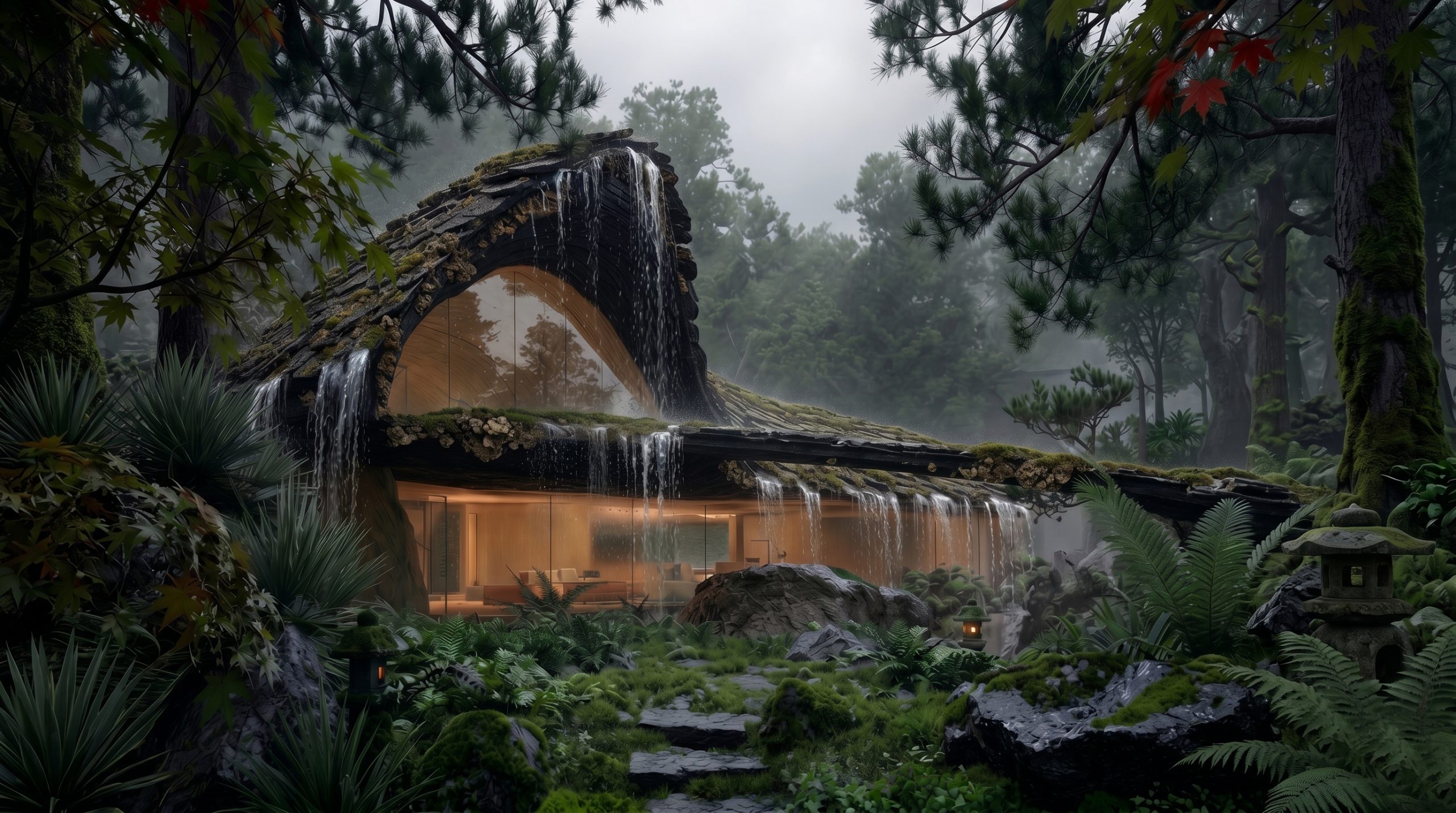
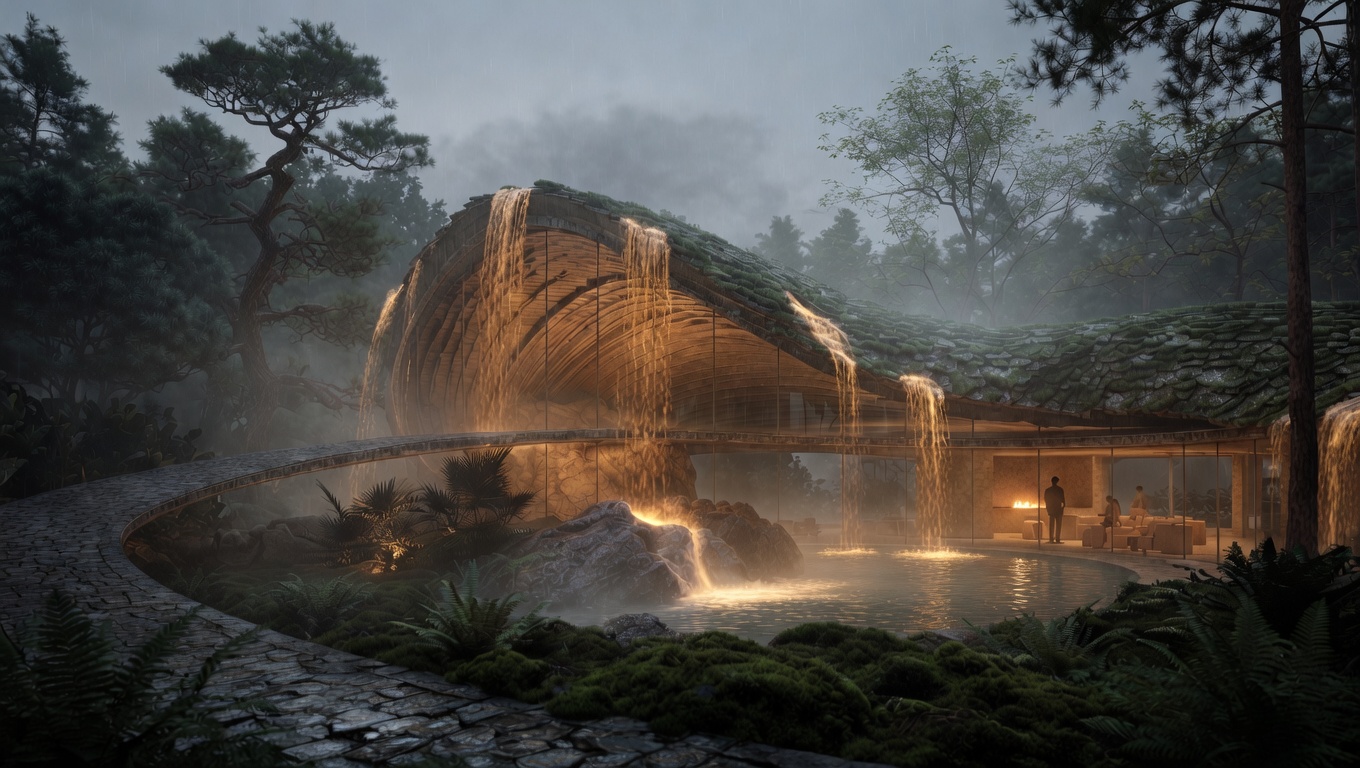
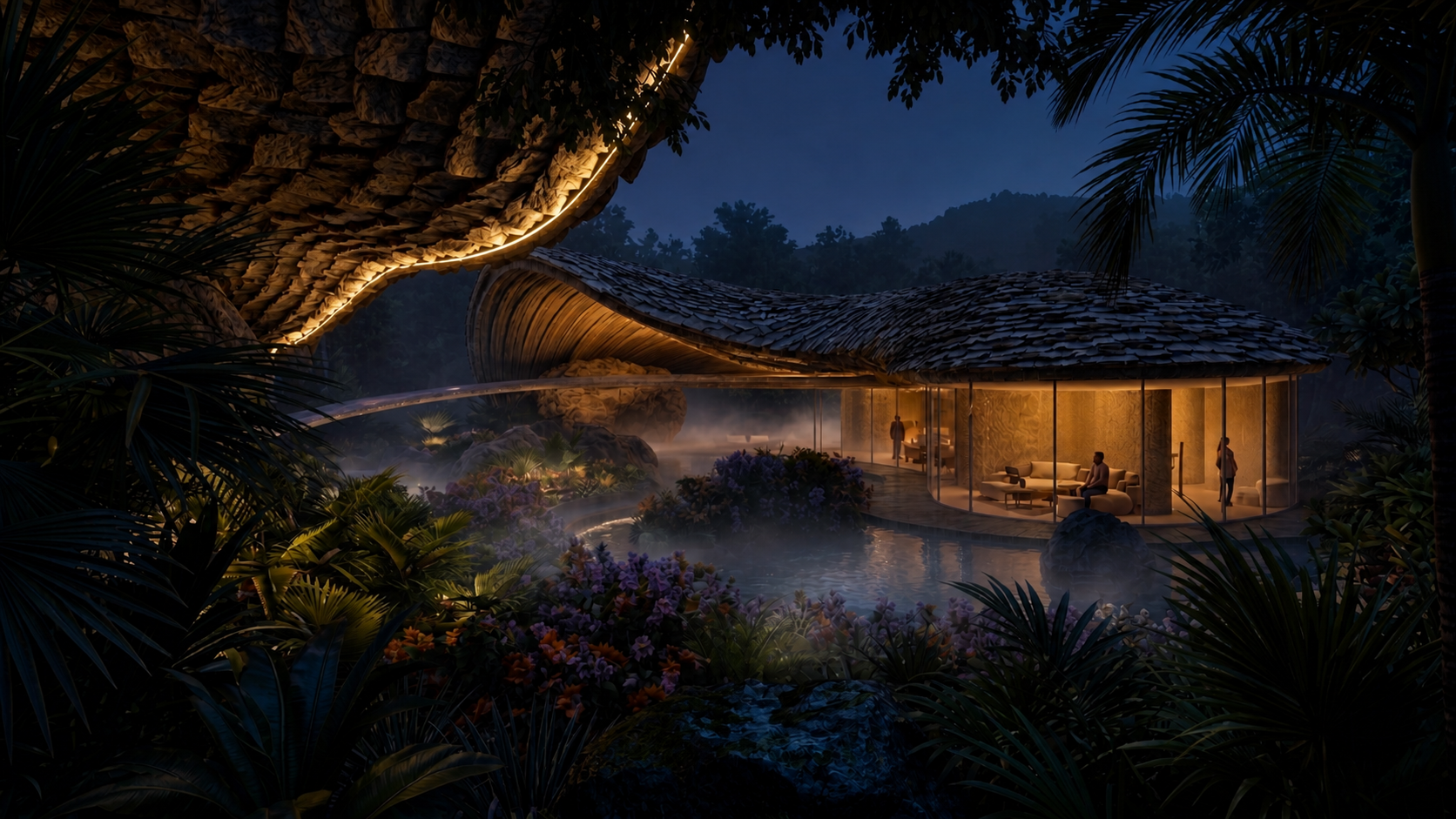
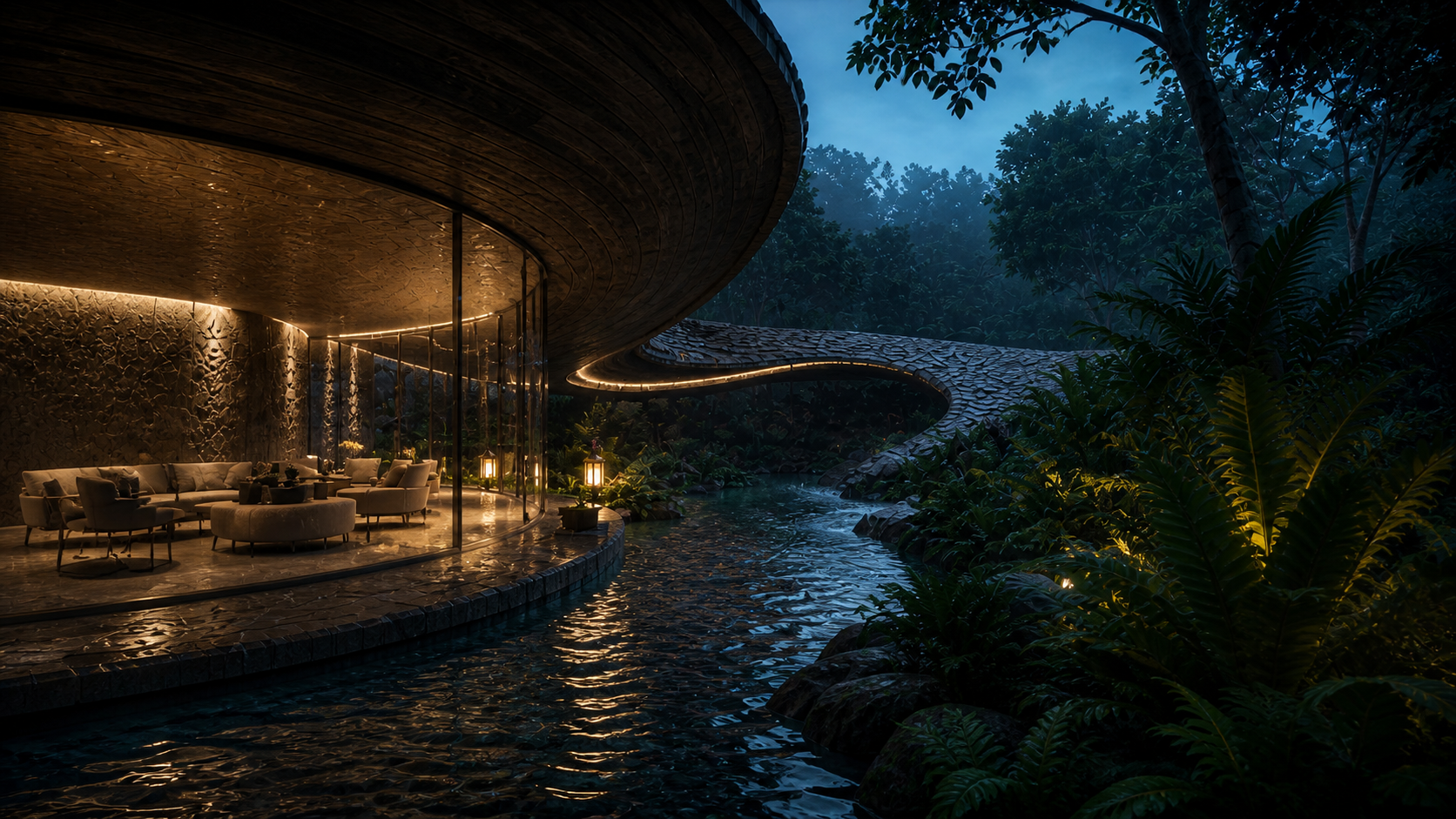
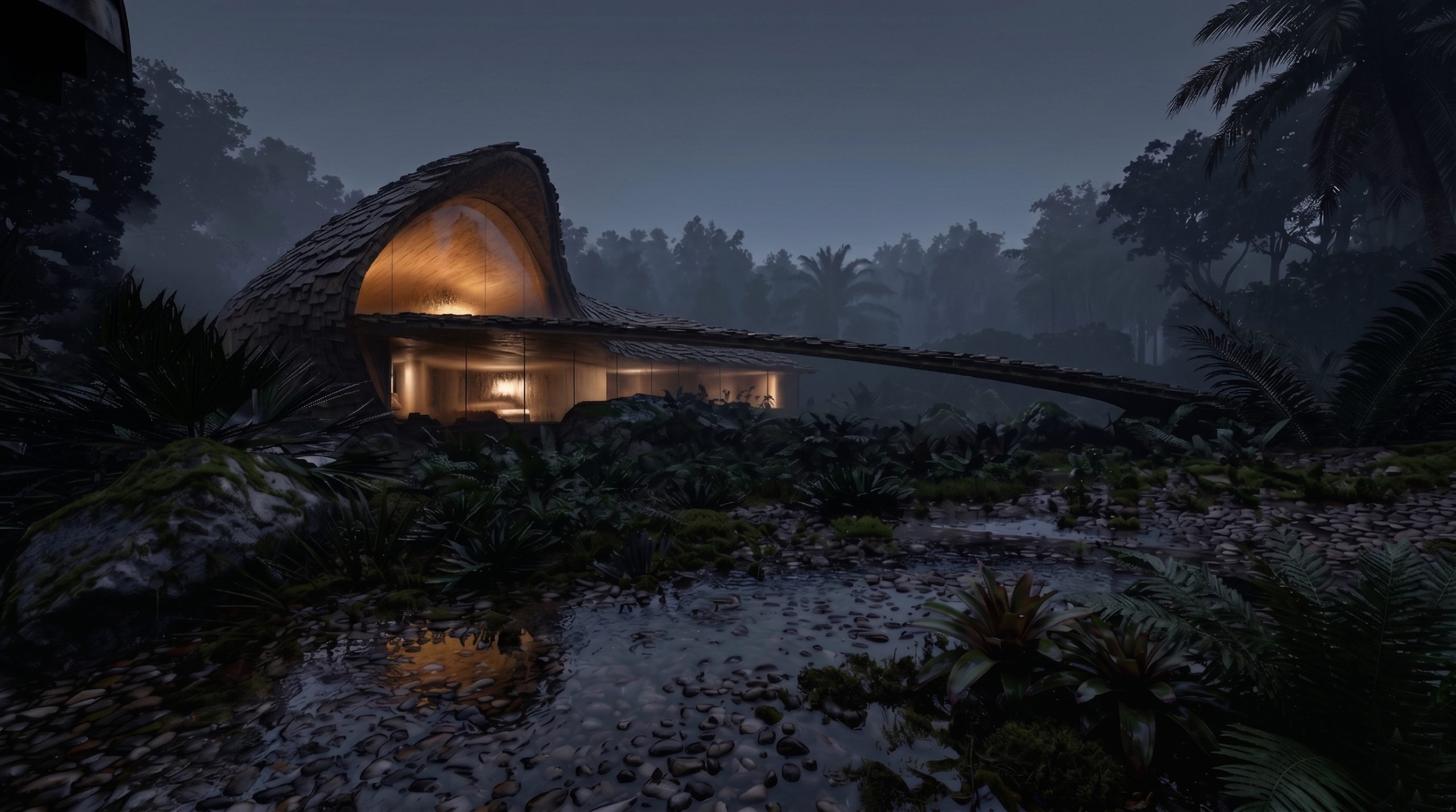
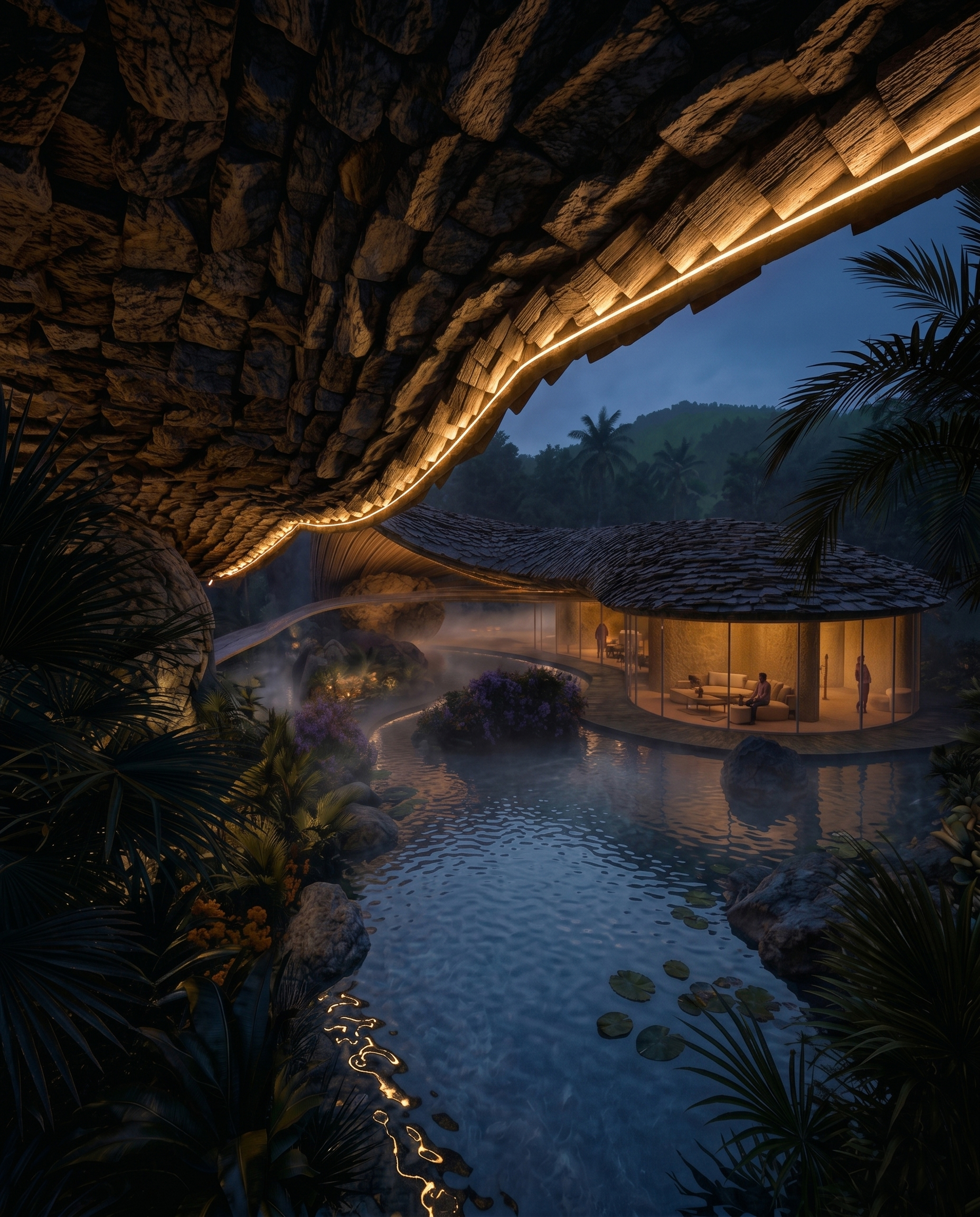
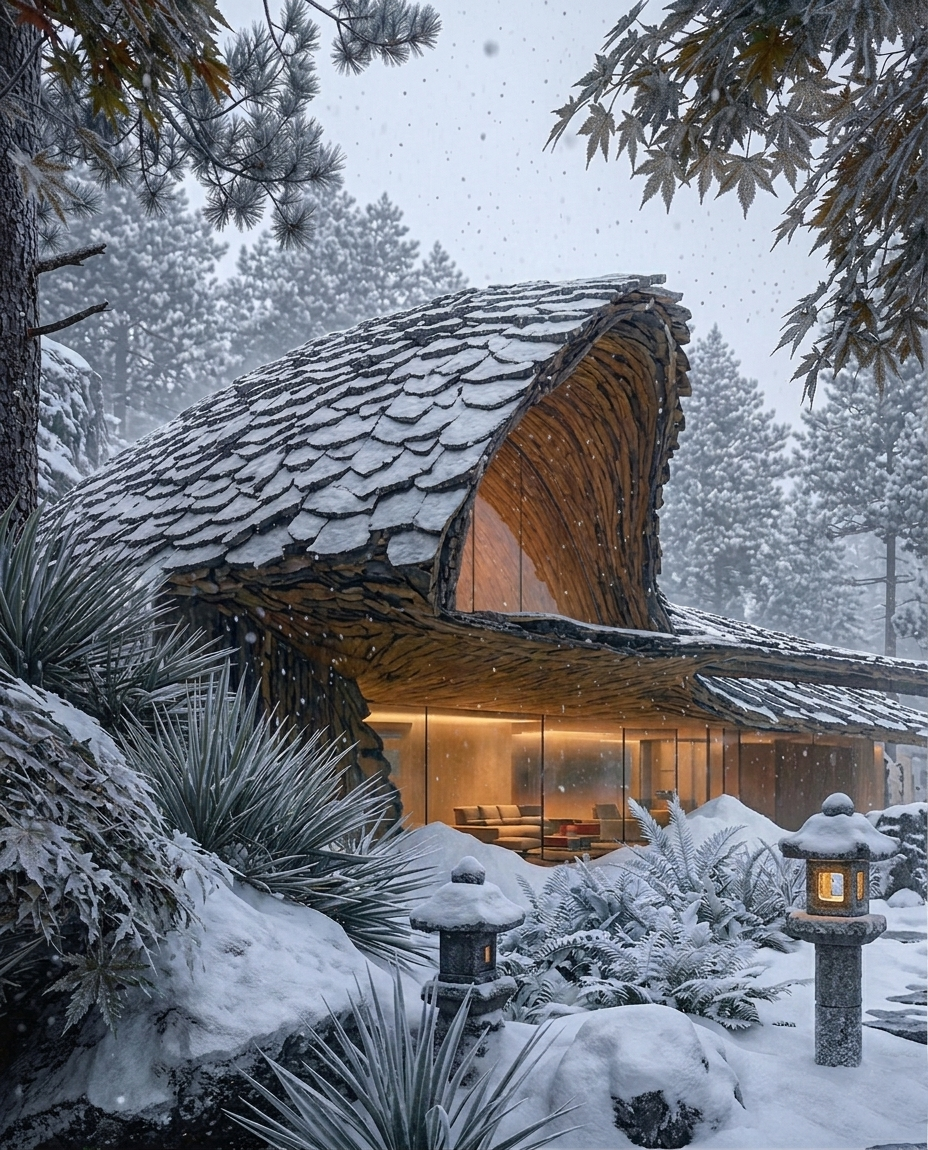
Positioned within existing rock formations and seasonal water landscapes on a Japanese site of exceptional ecological density, the villa does not occupy the terrain in the conventional sense. It inhabits the terrain's own absences — the negative spaces between stones, between water and land, between forest and open sky. The architecture emerges as a subtle canopy rather than a dominant object. The ground does not receive a building; it agrees to hold one.
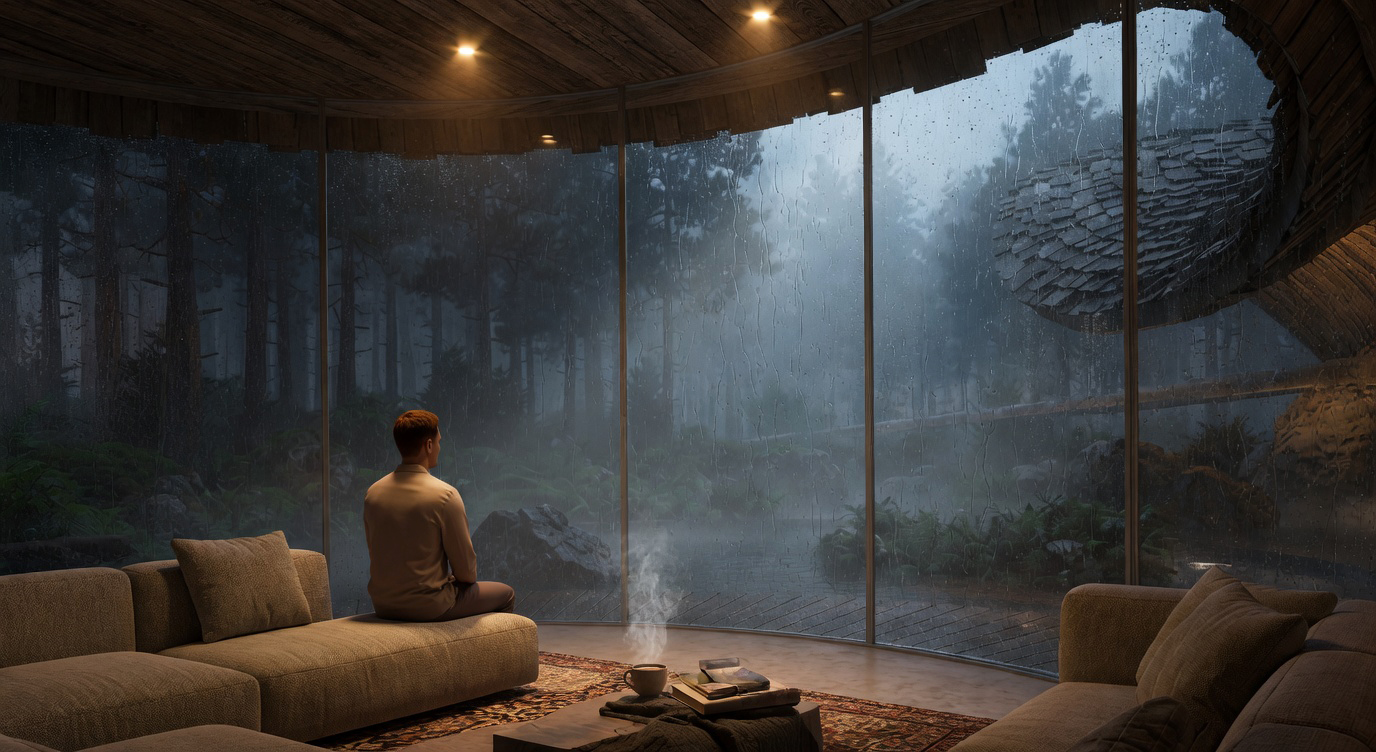
"The architecture acts as a lens rather than a barrier — it does not interrupt the landscape but frames Layer Zero as the primary protagonist of the spatial experience."said Oznur Pinar Cer and Danilo Petta.
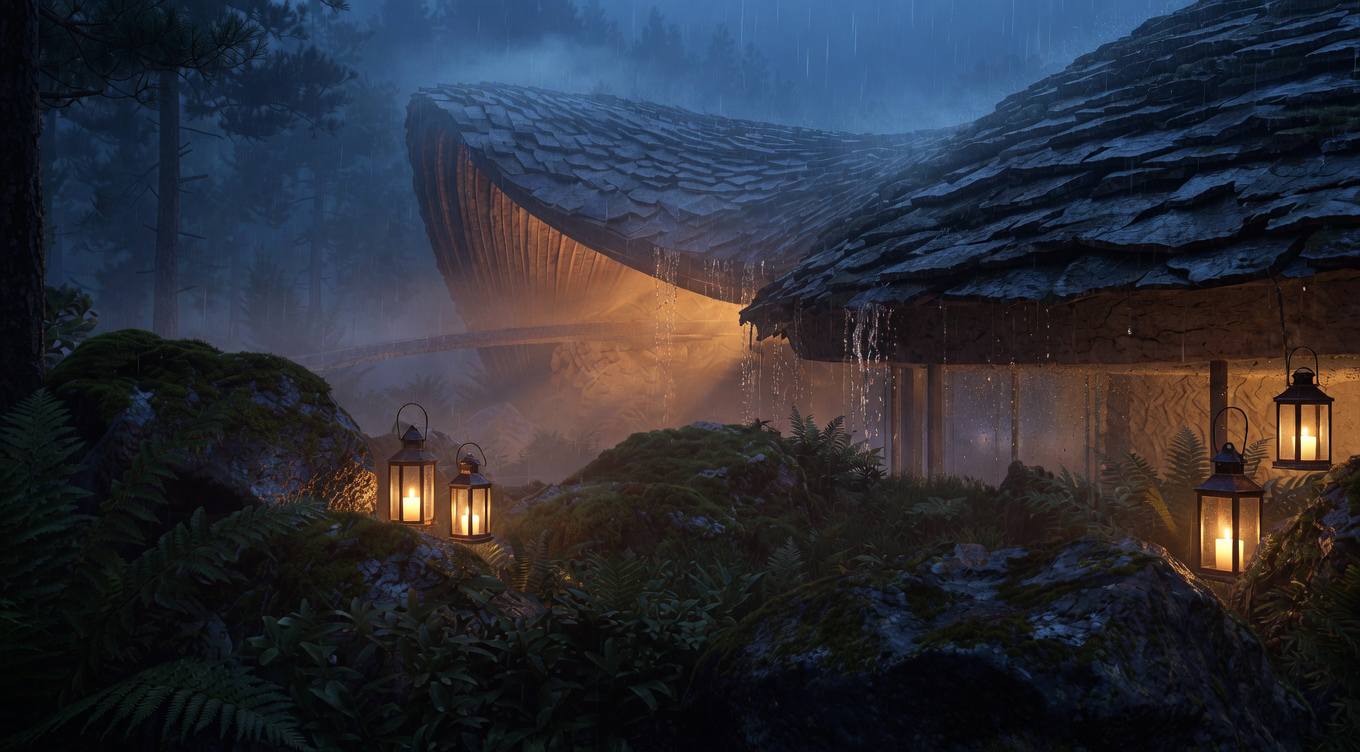
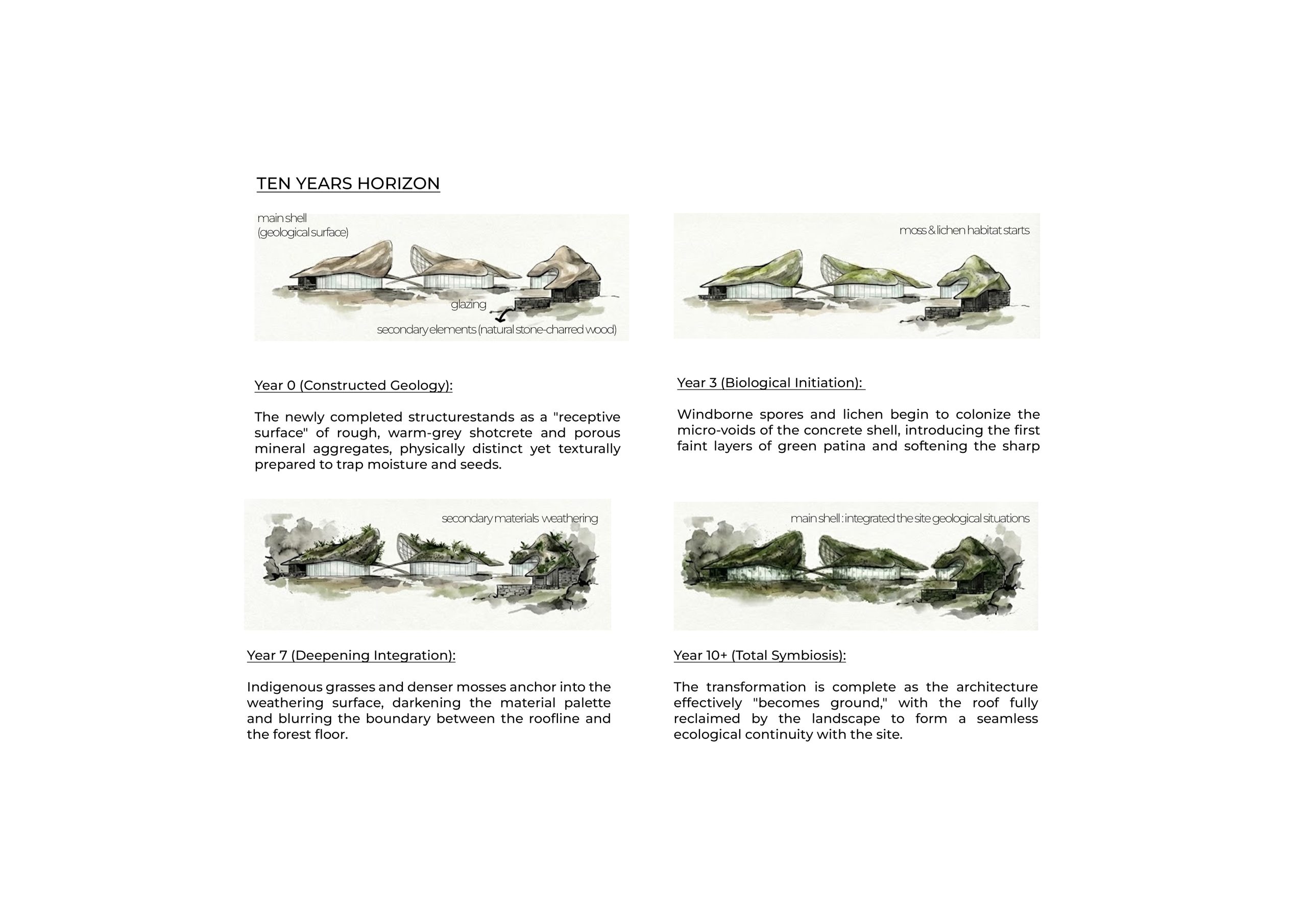
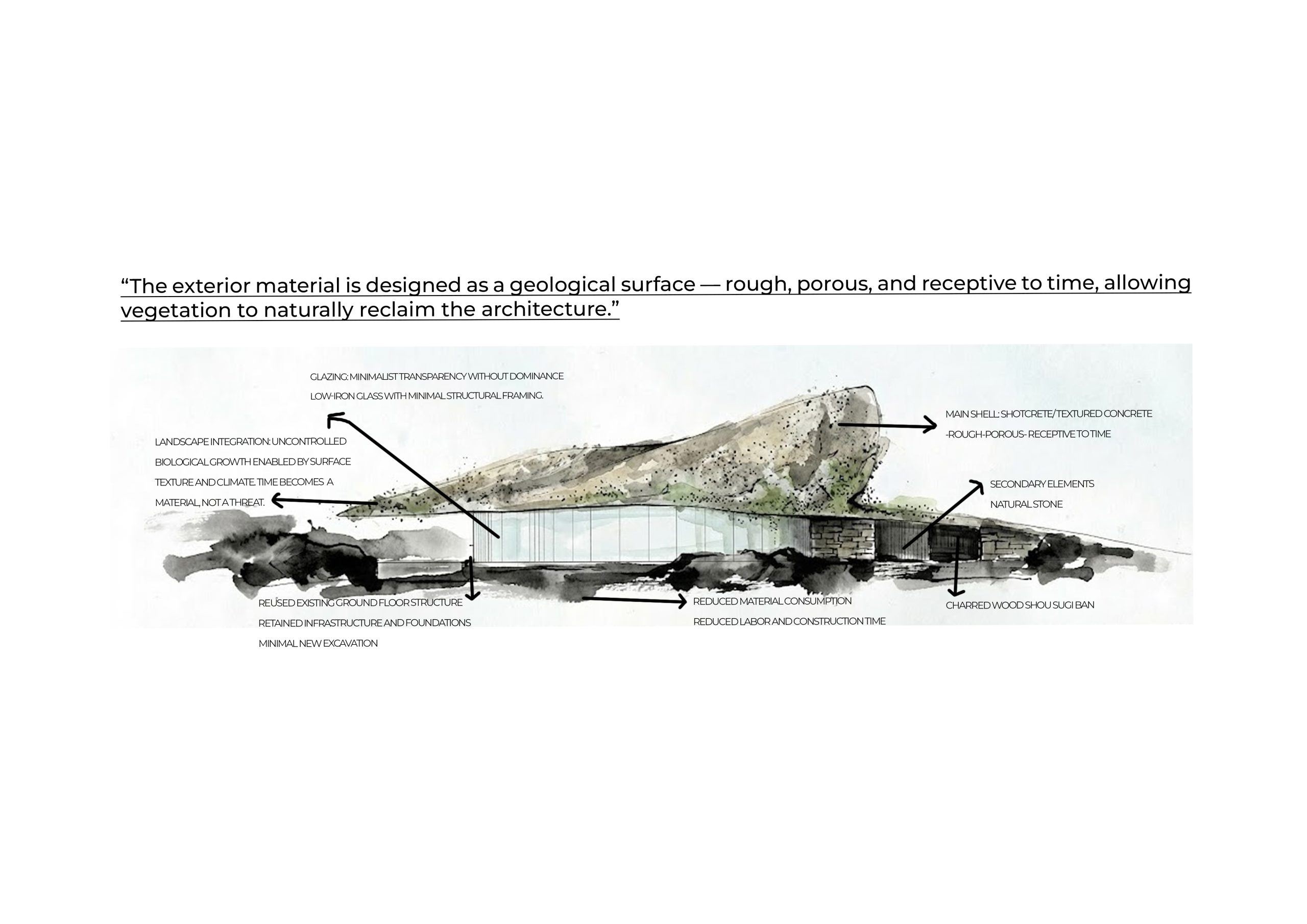
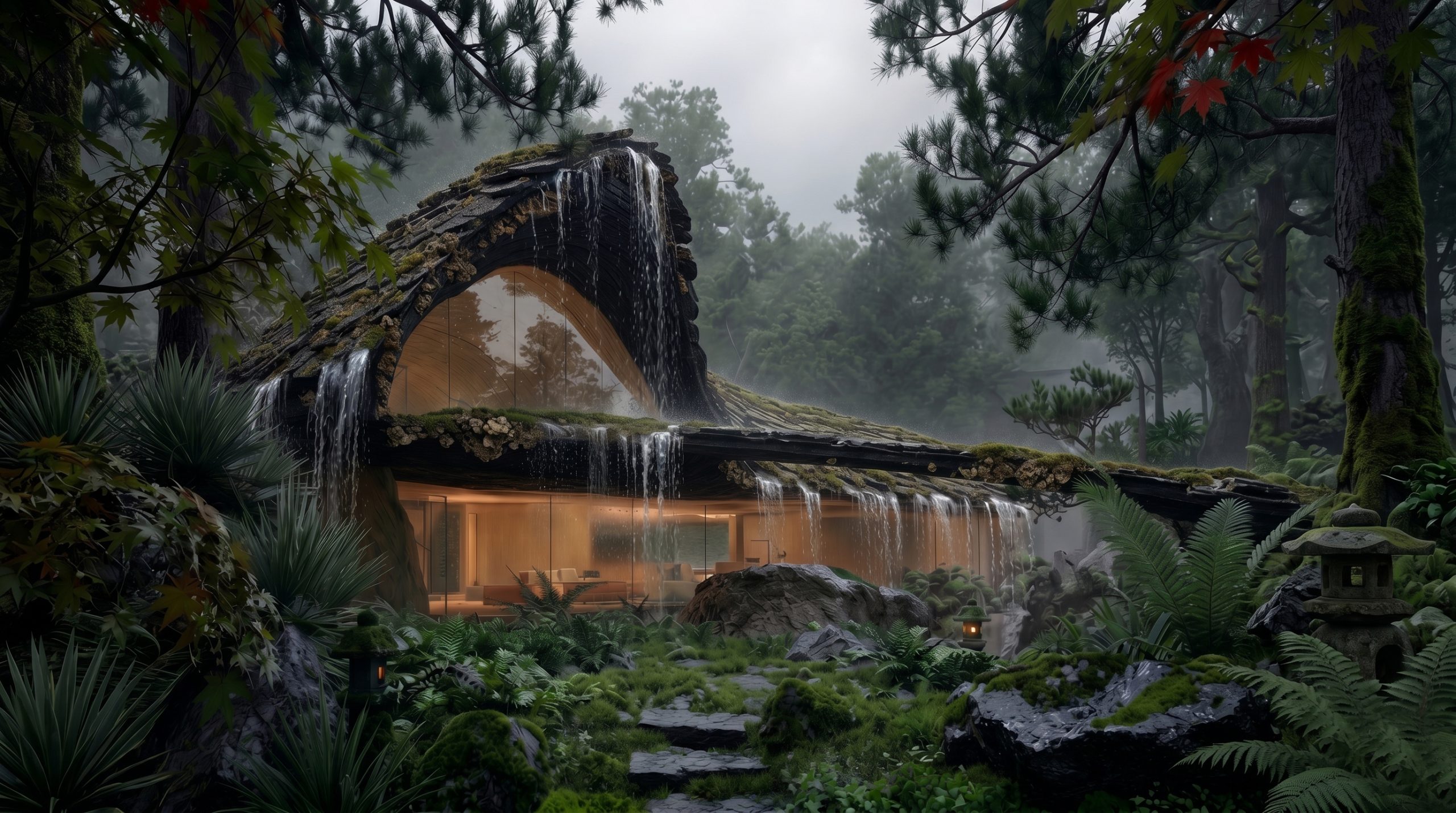
The disappearance is not metaphorical. It is material — driven by a calibrated combination of surface porosity, water retention, and programmed organic growth. The building's primary structural envelope is formed from rough-textured shotcrete with warm-grey mineral aggregates, chosen specifically for its capacity to function as a receptive surface. Unlike standard concrete, which repels nature, its intentionally porous texture creates micro-voids that retain moisture and trap windborne spores. There are no curated plantings, no maintenance regime. The architecture simply waits, and nature arrives on its own schedule.
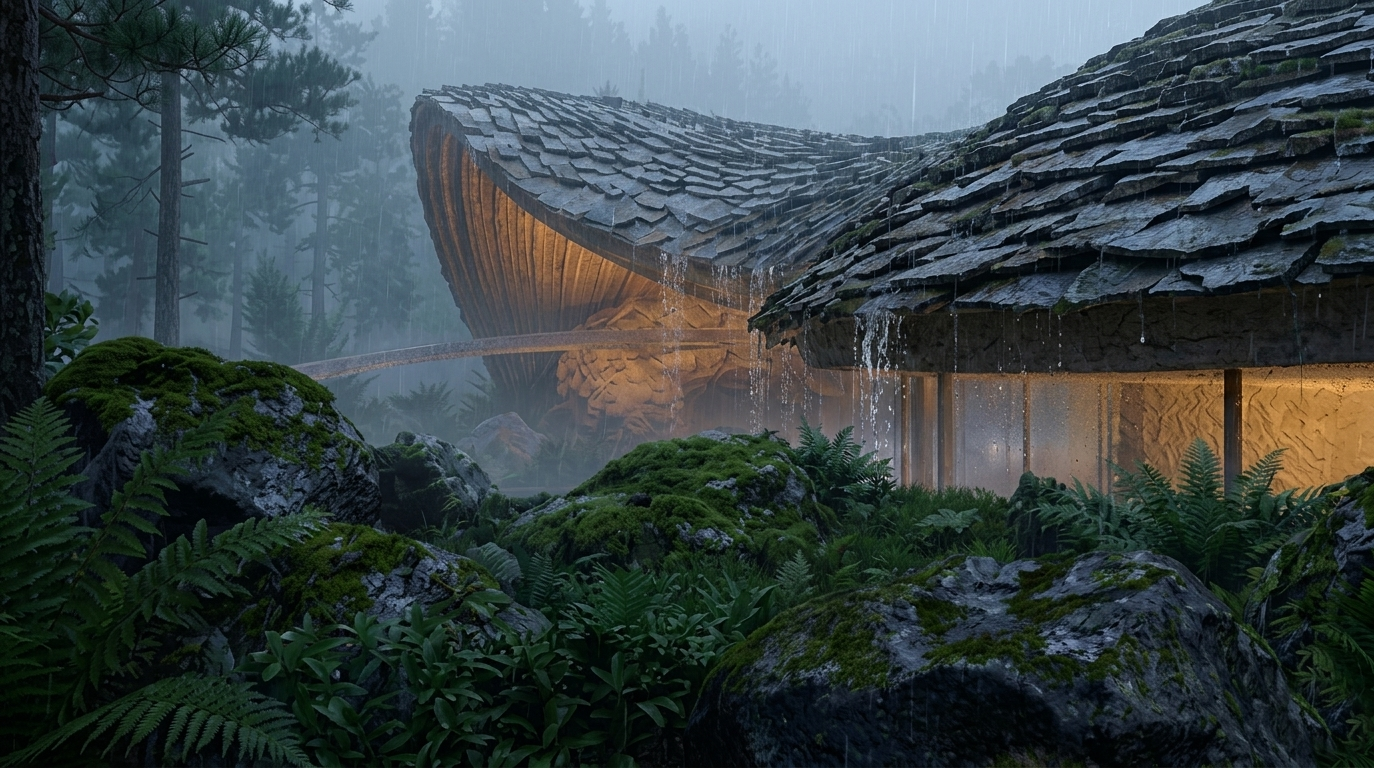
Over a ten-year horizon, moss, lichen, and native vegetation progressively colonise the structure. Edges soften. Boundaries dissolve. The Shou Sugi Ban timber elements silver toward the colour of the shotcrete shell. The dry-stack stone walls — assembled without mortar, allowing plant roots and small animals to inhabit their interstices — blur into the surrounding terrain. The roofline merges with the forest canopy. By year ten, the primary shell is covered by a continuous living layer. There is no building. There is an ecosystem.
Controlled decay, biological surfaces, moss and lichen — this is not deterioration. It is designed to disappear.
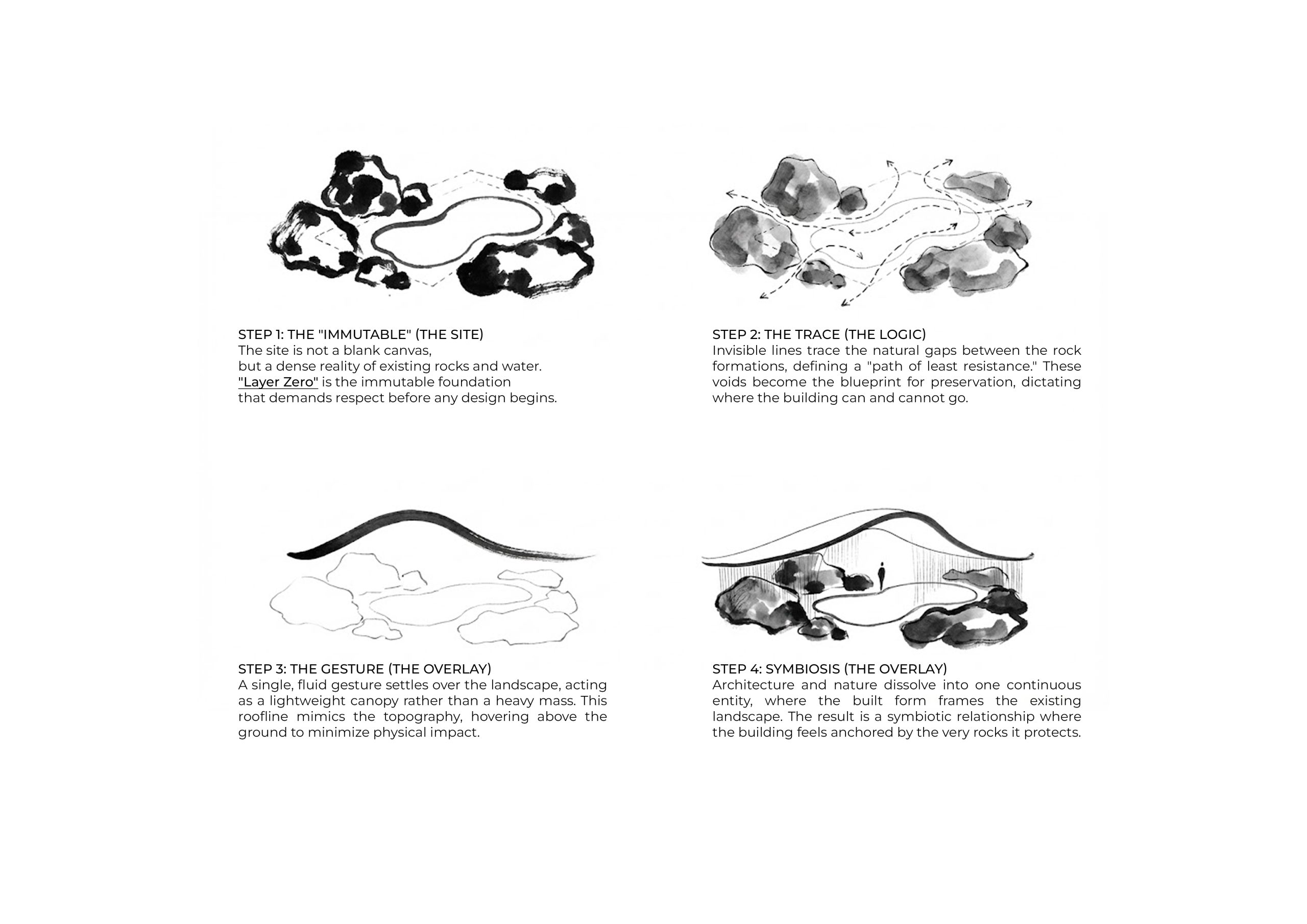
The design evolved through four phases with the logical inevitability of a natural process. First: the Immutable — an exhaustive inventory of the site in its unaltered state, its rock formations, still water pools, and seasonal lakes. Layer Zero is not a metaphor in the project's vocabulary. It is a protocol. The foundational stratum that exists before any human intervention carries intrinsic value that must be honoured before design can legitimately begin.
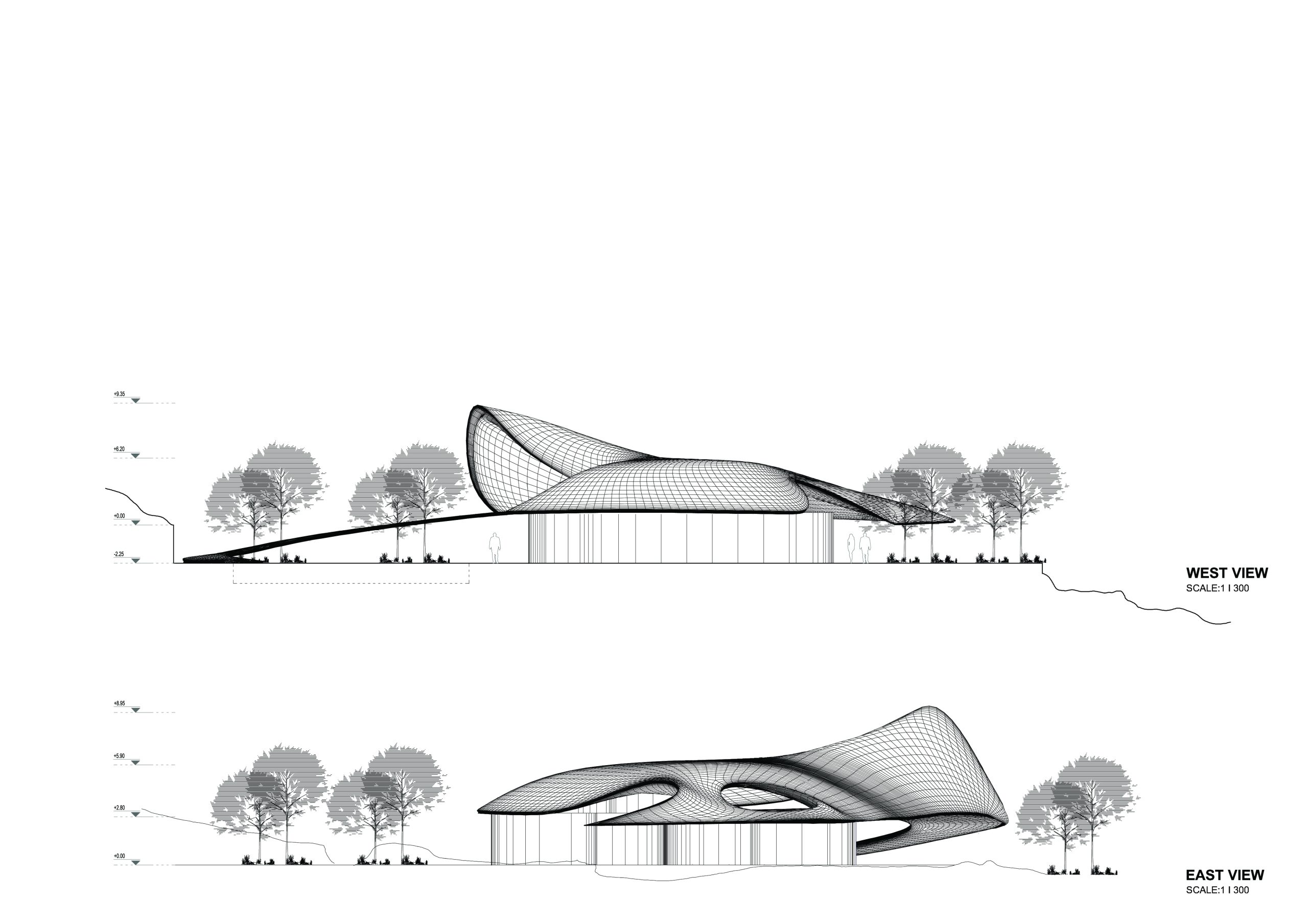
Then the Trace — invisible lines connecting the natural gaps between formations, defining a path of least resistance that becomes the blueprint for occupation. Then the Gesture — a single fluid roofline that settles over the landscape like a hand held gently above a surface without touching it. Finally, Symbiosis: the condition in which architecture and nature dissolve into one continuous entity. The built form appears anchored by the very rocks it protects, as though grown from them rather than placed among them. The distinction between natural and constructed becomes genuinely ambiguous — and that ambiguity is not a failure of definition, but the project's highest achievement.
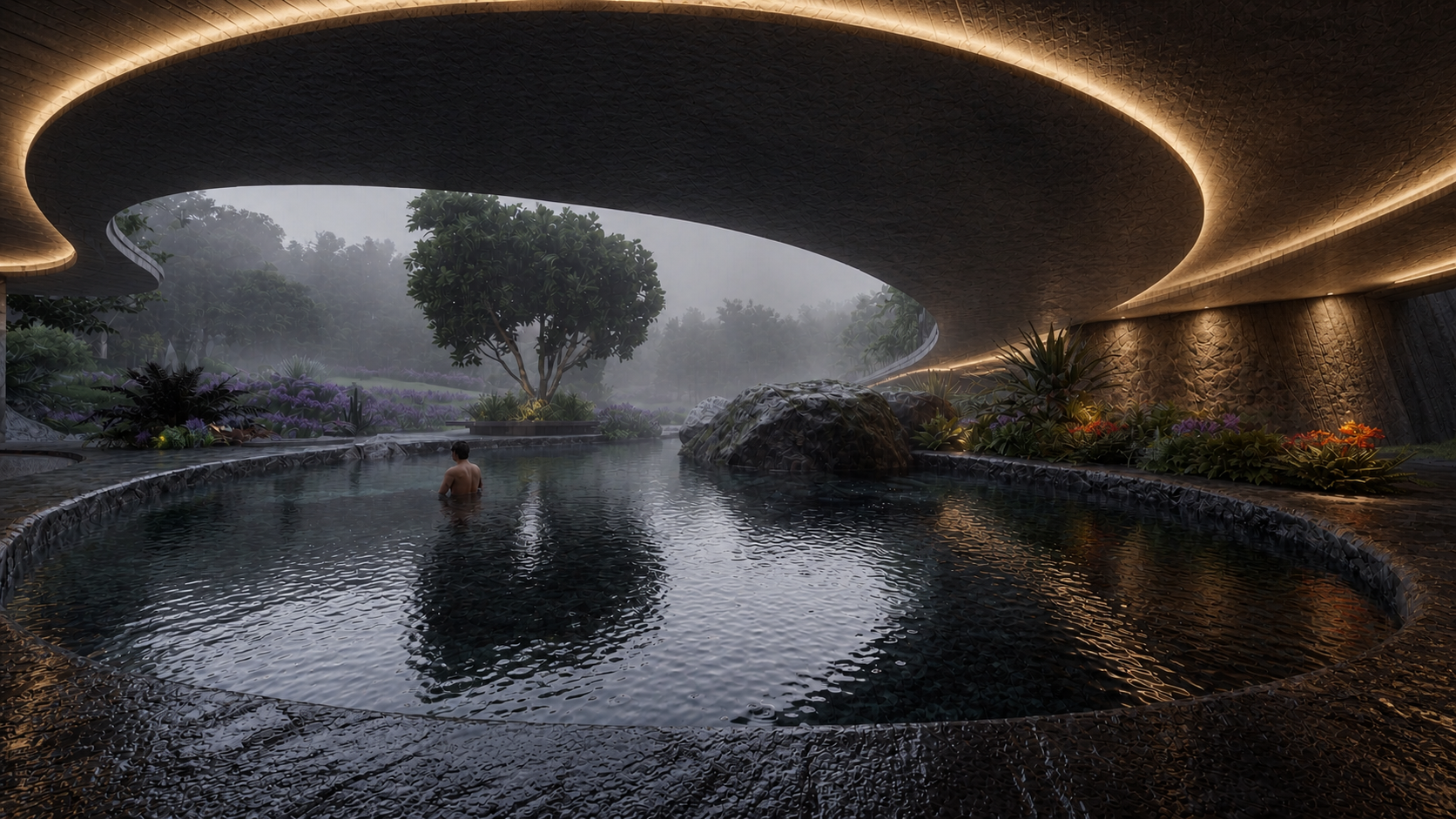
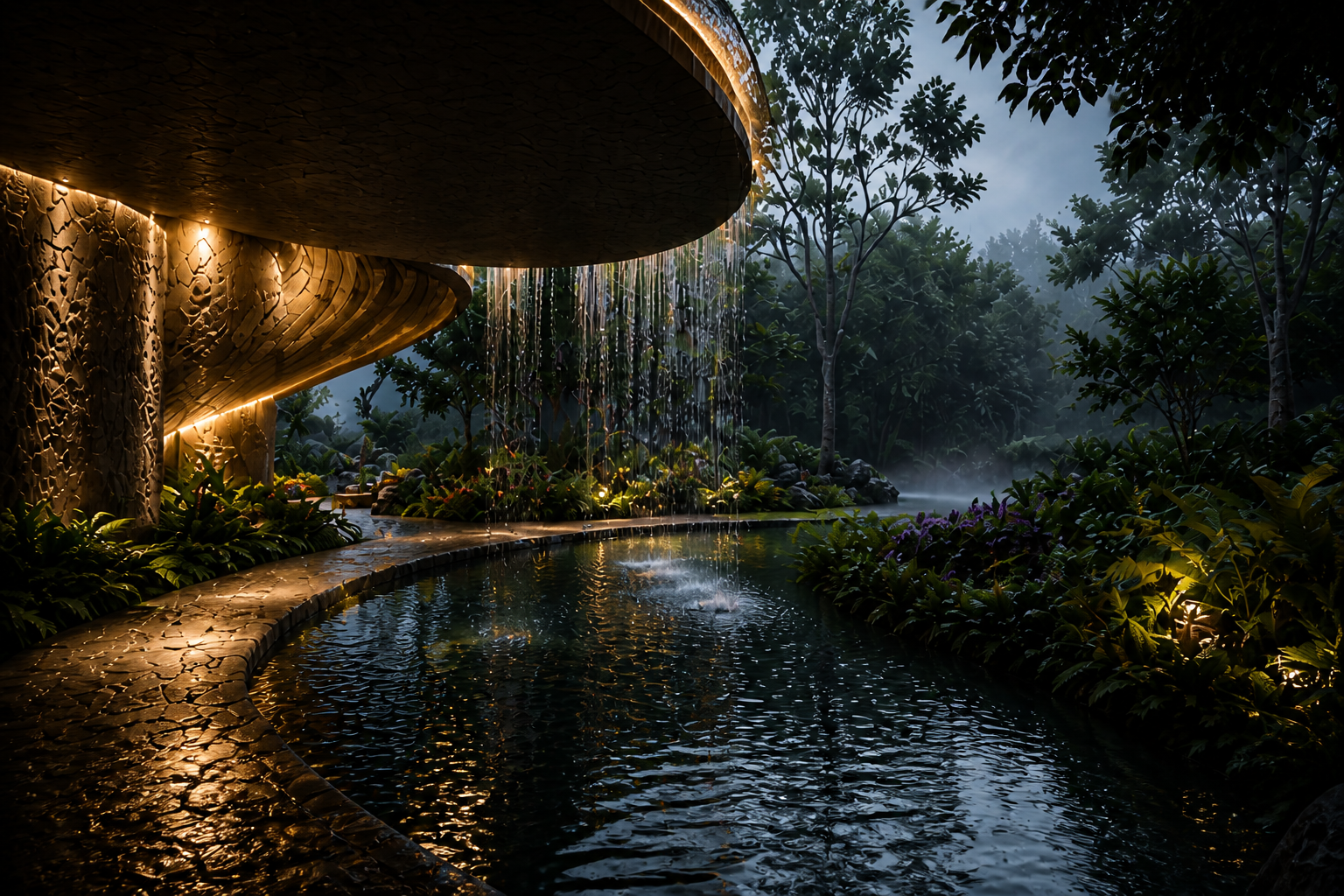
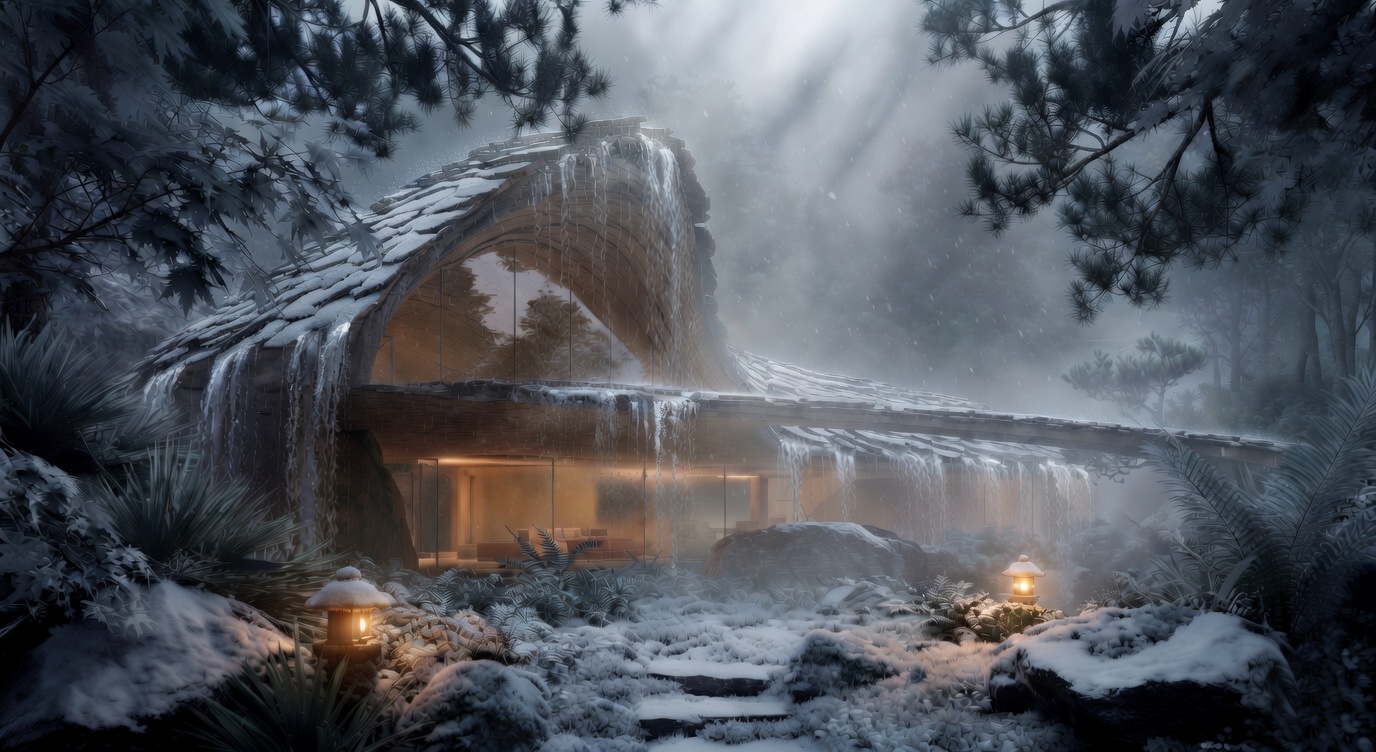
Water acts as the primary catalyst throughout the project — both in the biological transformation of the structure and in its active relationship with the landscape. The villa functions as a self-sustaining hydrological system. Its roof curvature is engineered not only for formal reasons but to concentrate rainwater collection, channeling it through a multi-layered bio-filtration assembly of indigenous gravel and aquatic vegetation. The water is restored to ecological purity before being returned to the site's seasonal lakes in an enhanced state.
Controlled Aperture and Condensation collectors supplement rainwater harvesting by capturing atmospheric moisture through the building's surfaces. A gravity-driven Micro Hydro Pressure system distributes water with minimal energy consumption. Solar Energy Harvesting Modules power operational systems. The water system restores the environment while the structure does not consume — it gives back. In a decade, the site's ecological condition should be demonstrably better for the building's presence than it would have been without it.
LAYER ZERO's conceptual framework is deeply consonant with Japanese spatial philosophy. The principle of ma — the meaningful void, the generative emptiness between things — is embedded in the project's negative space strategy, where the absence of building is as carefully designed as its presence. Wabi-sabi, the acceptance of imperfection and transience as sources of beauty, informs every material decision: the building does not fight the weathering of its surfaces — it choreographs it. The Japanese ritual of Misogi — purification through immersion in moving water — is enacted at the building scale through the hydrological system, which processes and returns water in a cycle of renewal mirroring the ritual's own logic.
In the Japanese context, where centuries of spatial philosophy have celebrated restraint, impermanence, and the dignity of the natural world, the ethical question at the heart of the project — what right does a building have to exist on a site that already holds its own intelligence? — becomes not merely academic but a moral obligation.
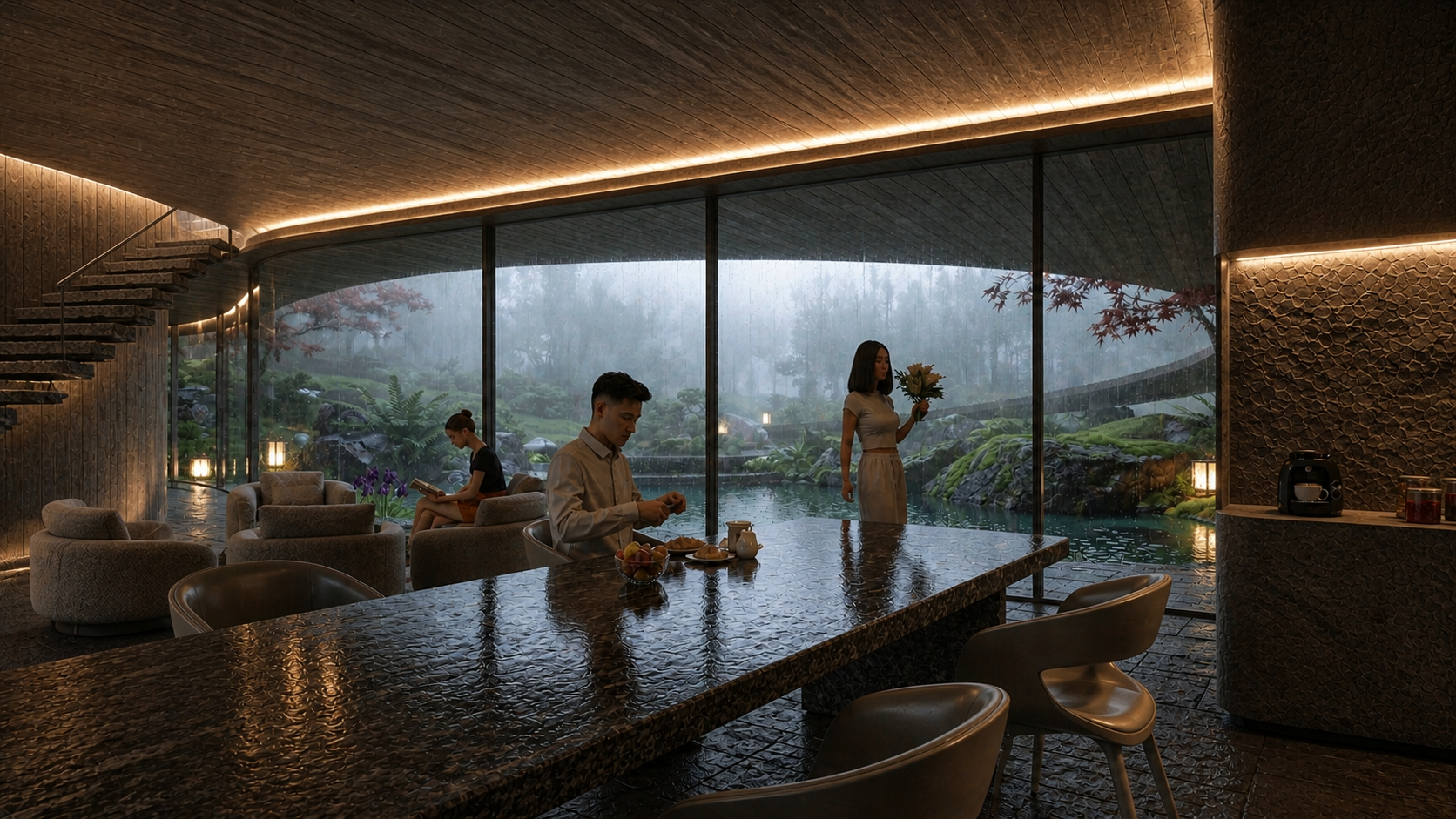
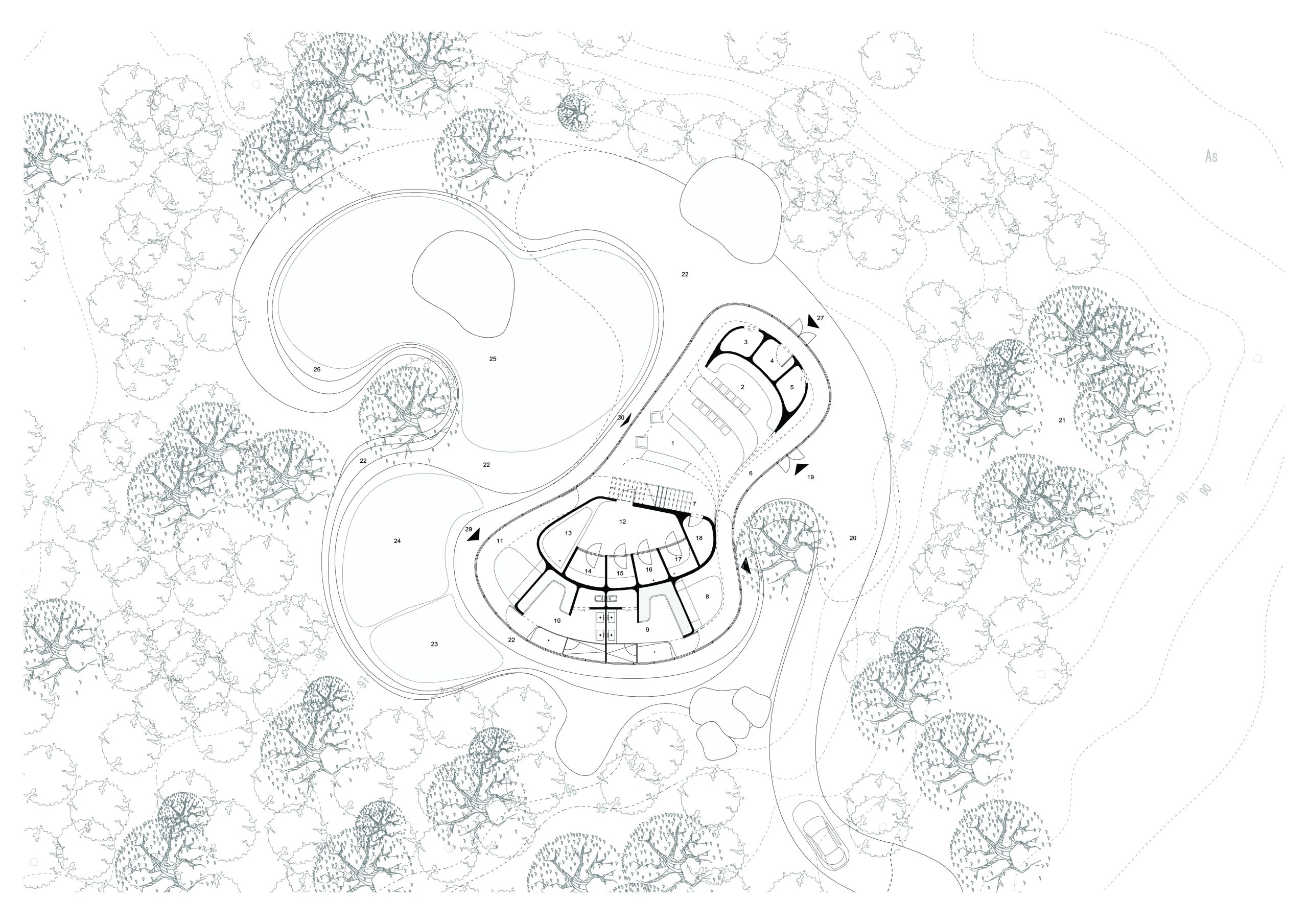
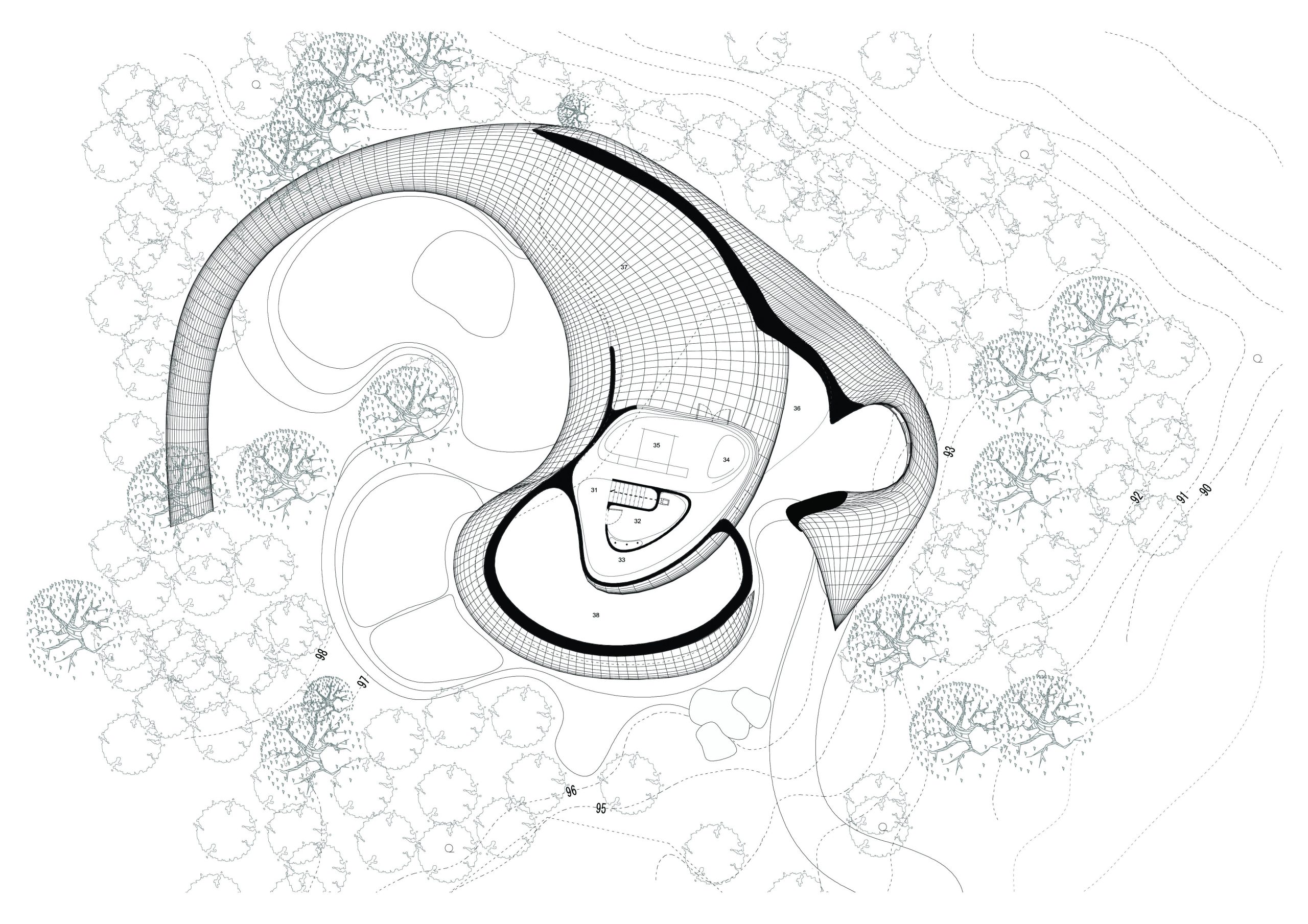
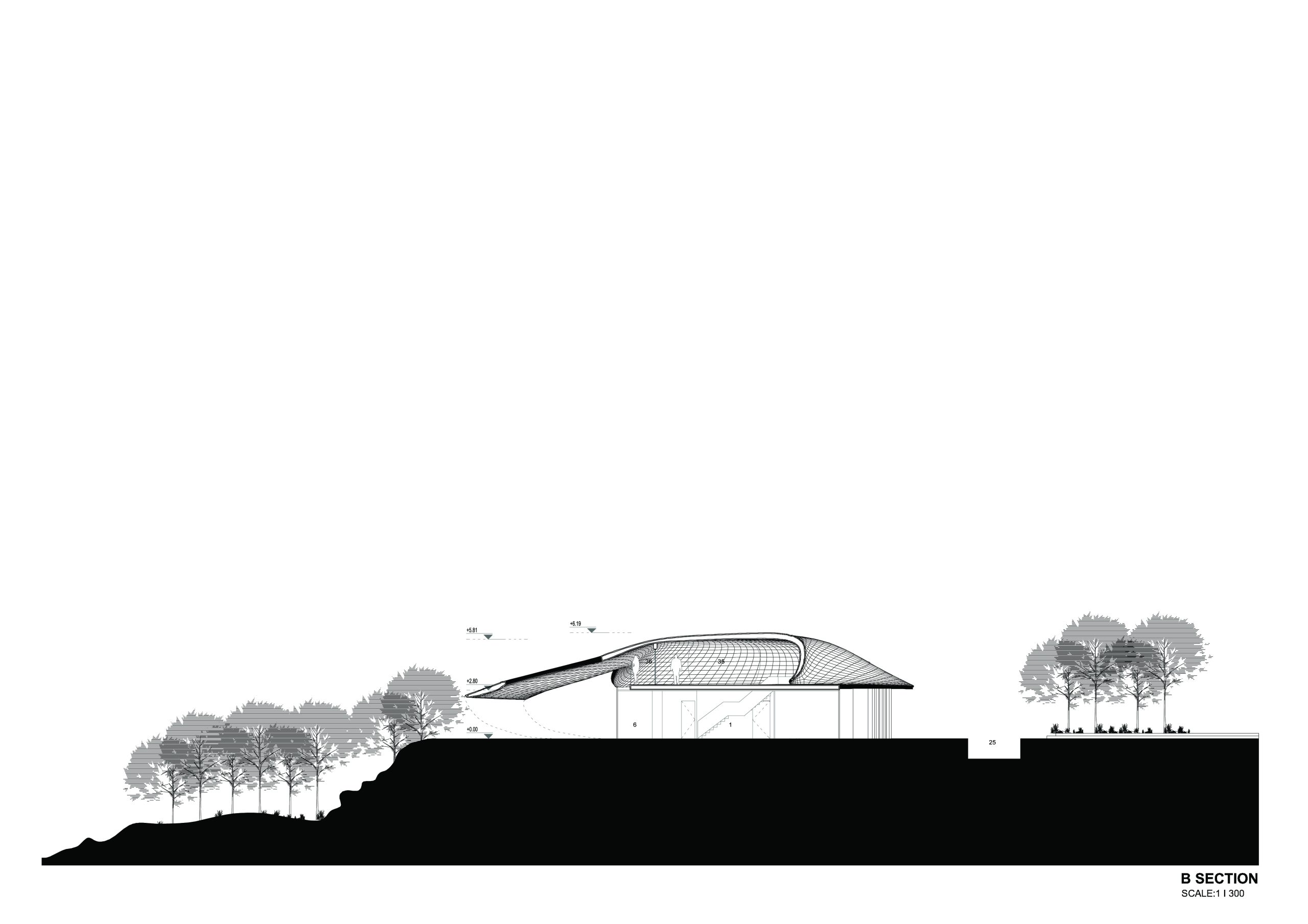
The villa is organised as a two-wing system anchored by a central double-height Entrance Hall (33.5 sqm). The Social Wing houses an open-plan living and dining area (29.3 sqm) and kitchen (21.8 sqm), opening directly onto the pool deck and landscape through full-width glazing that erases the conventional threshold between inside and outside. The Private Wing contains two bedrooms (19.3 sqm each), arranged radially along a curved arc, each oriented toward a distinct preserved natural view.
A wellness sequence integrates an indoor sauna (3.8 sqm), changing area, and direct access to an outdoor cold plunge pool (25.3 sqm) and open-air sauna (45.4 sqm) embedded within the terrain — a choreographed progression of thermal and atmospheric contrasts that dissolves the boundary between interior and exposed landscape. The upper level operates as a secluded observation layer: a Master Suite (18 sqm) with an open bathroom beneath the complex roof curvature, opening onto a continuous panoramic terrace (50 sqm) at tree-canopy level.
PROJECT SPECIFICATIONS
Project: LAYER ZERO — Retreat Villa, Japan
Office: MASK Architects
Chief Architects and Designers: OZNUR PINAR CER, DANILO PETTA
Total Gross Built Area: 302.7 sqm | Footprint: 238.7 sqm | Max Height: 5.52 m
Natural Pool: 263 sqm | Open & Semi-Open Exterior Spaces: 350+ sqm
Primary Materials: Rough Shotcrete / Shou Sugi Ban / Dry-Stack Stone / Low-Iron Frameless Glass
Year: 2026 | Status: Design Complete